If you have ever seen a schnauzer with tail, you may have wondered why it looks so different from the classic show-ring image. Some dogs have a short upright tail, while others have a long, curved tail that moves with every step. At SchnauzerBest, we love these little details because they reveal how breed history and modern dog ownership can overlap.
The tail story also has a surprising twist. Tail appearance can depend on the dog’s country, breed standard, age, and whether the breeder chose docking. So, if you find a schnauzer with a tail, there is usually more to the story than meets the eye.
What Does a Natural Tail Look Like?
The Natural Schnauzer Tail
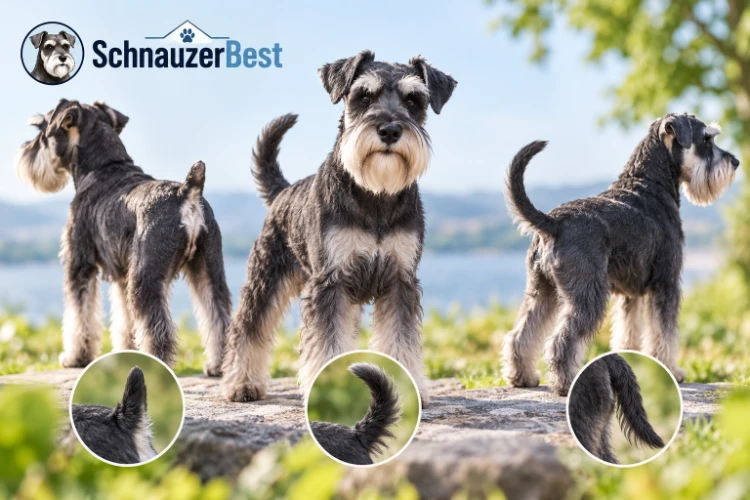
A natural schnauzer tail usually looks longer than the familiar docked version. Its exact shape can vary between individual dogs and between the three recognized sizes. The FCI standards describe natural tails differently across the breed family, so owners should check the standard for their specific variety.
Schnauzer With Long Tail
A schnauzer with long tail can look quite different in photographs. The tail may curve, taper, or hang naturally when the dog relaxes. In other words, a long tail does not automatically mean something is wrong.
Schnauzer Tail Undocked
A schnauzer tail undocked can also move in expressive ways. We often think tails add personality, and this breed certainly knows how to use one. A natural tail may rise during excitement and relax when the dog settles down.
Why Were Tails Docked?
Working-Dog History
Historically, docking formed part of the traditional appearance of several working breeds. The Miniature Schnauzer developed as a small working dog and vermin hunter, while its larger relatives performed farm and guarding duties. Some historical explanations connect short tails with reducing places where working dogs or vermin could grab them.
Schnauzer Tail Docking
Schnauzer tail docking became closely linked with traditional breed presentation. Over time, that look entered formal breed standards and became familiar in the show world. Today, however, laws and kennel rules differ between countries.
Docked Tails
Docked tails remain common in some regions, especially where breed standards still describe them. The American Miniature Schnauzer Club standard, for example, describes a high-set tail carried erect and traditionally docked.
Breed Standards and the Dog Show Ring
Miniature Schnauzer Standards
The miniature schnauzer creates an interesting example because standards differ by organization. The American Miniature Schnauzer Club’s current standard describes a docked tail for proper presentation. However, rescue dogs and companion dogs can also have undocked tails.
Natural Tails at a Dog Show
A dog show does not always follow the same rules worldwide. The AKC explains that breed standards can permit procedures such as docking when the standard specifies them. Meanwhile, the FCI has introduced rules affecting the showing of docked dogs in certain breeds and circumstances.
Tails Docked or Natural?
This means owners should never judge a dog’s quality simply by its tail. Breed standards can change, and local laws can also affect what breeders may do. The Standard Schnauzer experience in the United States shows how natural tails have already created discussion among breeders and judges.
What Should Owners Know?
Appearance Is Only One Detail
Whether you own a natural or docked dog, the tail is only one part of the picture. Structure, movement, coat, temperament, and overall health matter too. We think that is worth remembering when photographs make one style look like the “only” correct version.
A Tail Can Tell a Story
A schnauzer dog tail can reveal something about breeding traditions, local rules, and personal history. A schnauzer with tail may be completely normal, even if you usually see short tails in advertisements. And honestly, watching a long tail wag can be hard to beat.
For owners researching puppies, we recommend checking the relevant breed standard and local docking laws first. Ask breeders clear questions about tail practices and show plans. Most importantly, choose responsible care over appearance alone.
Final Thoughts
The story of the tail combines history, working purpose, breed standards, and modern animal-care rules. A docked tail reflects one tradition, while a natural tail reflects another path. At SchnauzerBest, we think both deserve a closer look because every tail has a story.