
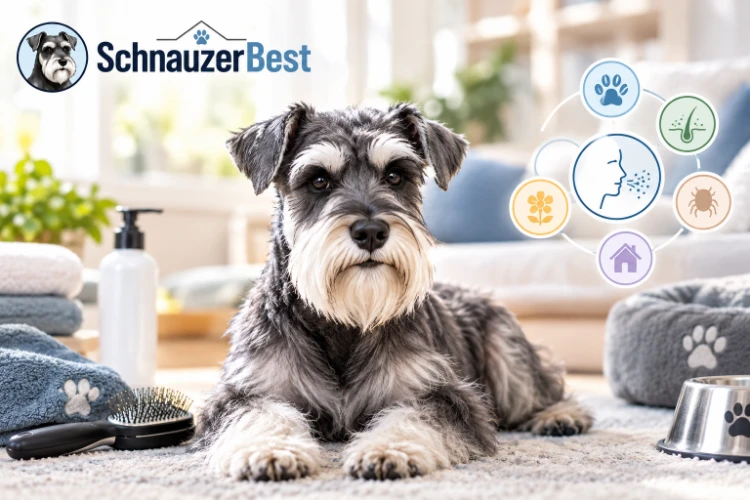
If you love dogs but deal with sneezing or itchy eyes, choosing a breed can feel tricky. You may have searched schnauzer hypoallergenic are schnauzer hypoallergenic and found mixed answers. The simple truth is that no dog guarantees an allergy-free home, but some breeds may be easier for certain people to tolerate.
Schnauzers have a reputation for low shedding. Their wiry coat also needs regular care, which can help control loose hair and some allergens around the home. Still, pet allergies usually involve proteins from dander, saliva, urine, and other sources rather than hair alone.
At SchnauzerBest, we think the best approach starts with facts. So, let’s look at shedding, grooming, dander, allergy symptoms, and everyday life with these distinctive dogs.
Are Schnauzers Hypoallergenic?
Low Shedding Does Not Mean Allergy-Free
So, is a schnauzer hypoallergenic? Not completely. The American Kennel Club includes Miniature, Standard, and Giant Schnauzers among breeds often considered by people with allergies. However, the AKC also makes clear that no dog is 100 percent hypoallergenic.
That distinction matters. A low-shedding dog may leave less hair around your home, but allergens can still remain on the skin and coat. Your immune system may react to those proteins even when you find very little fur on your sofa.
Why the Coat Can Make a Difference
The three Schnauzer breeds have dense, wiry coats. The Miniature variety has a hard outer coat and close undercoat, while regular grooming helps maintain its condition. The Standard also has a wiry double coat, and the Giant requires consistent coat maintenance.
This coat type creates one useful advantage: less loose hair tends to fly around your house. However, less hair does not equal fewer allergens. Think of it as reducing the tumbleweeds, not removing every microscopic trigger.
Shedding, Dander, and Allergy Symptoms
What Actually Causes Pet Allergies?
Many people blame dog hair first. In reality, the main problem often comes from proteins found in pet dander, saliva, urine, and other biological material. Hair can collect and carry these substances around the home.
That explains why two people can live with the same dog and react differently. Their immune systems may respond to different allergens or different exposure levels. In other words, your nose gets the final vote.
Common allergy symptoms can include:
- Sneezing
- Runny or blocked nose
- Itchy or watery eyes
- Coughing
- Wheezing
- Skin irritation or hives
- Chest tightness or shortness of breath
The American College of Allergy, Asthma and Immunology recommends professional evaluation when dog exposure causes repeated symptoms.
Can Different Schnauzers Cause Different Reactions?
Absolutely. One person may tolerate a miniature schnauzer but react strongly to another individual dog. The same principle can apply to a standard schnauzer or giant schnauzer.
The coat itself also varies between individual dogs. Grooming habits, indoor exposure, saliva, skin flakes, and other environmental factors can change how much allergen you encounter. Research has not shown that any dog breed completely eliminates allergy risk.
Coat Care and Grooming
Regular Grooming Matters
Regular grooming plays an important role in keeping the coat clean and manageable. Brushing can remove loose material before it spreads across furniture and floors. Professional grooming can also help maintain the characteristic wiry texture.
If you are considering cutting a schnauzer, remember that clipping changes the coat’s appearance and texture. Show dogs may receive hand stripping, while many family pets receive practical clipping instead. AKC guidance notes that Miniature Schnauzers need coat maintenance, while Standard and Giant Schnauzers also require regular grooming.
For allergy-sensitive homes, a practical routine may include:
- Brush the coat regularly.
- Clean the beard after meals.
- Wash bedding often.
- Vacuum floors and furniture.
- Use a HEPA-filter vacuum when possible.
- Keep grooming away from sleeping areas.
- Ask a non-allergic person to handle grooming when possible.
What About Bathing Your Pet?
Bathing your pet can help remove material from the coat, but it should not replace regular cleaning. ACAAI recommends bathing dogs regularly as one possible way to reduce exposure to dog allergens.
Avoid excessive bathing, though. Frequent washing can irritate the skin and create another problem. A veterinarian or professional groomer can help you choose a suitable schedule.
Choosing a Coat and Living With Allergies
Does Color Matter?
You may see salt and pepper, black and silver, and solid black coats in breed discussions. These colors create very different looks, but coat color does not make a dog allergy-free. The Miniature breed standard recognizes salt and pepper, black and silver, and solid black.
So, if you are choosing between colors, focus on temperament, health, grooming needs, and your personal reaction. Your immune system is not impressed by a stylish beard.
What About a Russian Schnauzer?
The term russian schnauzer sometimes appears in online searches, but it does not identify one of the three AKC-recognized Schnauzer breeds. The recognized breeds are the Miniature, Standard, and Giant.
If you encounter unusual breed names online, check the source carefully. Search terms can sometimes create confusion that has little to do with official breed classifications.
Allergy-Friendly Habits for Pet Parents
Keep Allergens Under Control
Living with a low-shedding dog still requires a cleaning strategy. Pet parents with allergies should pay attention to carpets, sofas, bedding, and other surfaces where allergens can collect.
Useful habits include:
- Keep the dog out of the bedroom.
- Wash hands after handling the dog.
- Vacuum regularly.
- Wash dog bedding frequently.
- Clean soft furniture and floors.
- Consider HEPA air filtration.
- Groom the dog in a ventilated area.
- Avoid allowing the dog to lick your face.
ACAAI and AAFA both recommend reducing exposure to pet allergens and keeping pets away from sleeping areas.
Think About Other Pets and Allergens
If your home includes dogs and cats, remember that each animal can produce different allergens. A reaction may not always come from the dog you suspect. Dust, pollen, mold, and other household allergens can also collect on a dog’s coat.
This is why allergy testing can provide useful information. Instead of guessing, you can work with an allergist to identify the triggers affecting your immune system.
Health, Exercise, and Everyday Care
Allergies Are Not the Only Consideration
Low shedding should never become the only reason to choose a dog. These are active working dogs with intelligence, energy, and strong personalities. They need exercise, training, and mental stimulation to stay happy.
The Standard breed, for example, historically worked as a farm dog, guard dog, and vermin hunter. Modern dogs may enjoy walks, obedience work, agility, puzzle games, and family activities instead.
Watch for Other Health Issues
Good coat care also gives us a chance to check the skin, ears, eyes, and paws. Owners should watch for irritation, unusual odor, redness, or repeated ear infections.
These health issues do not automatically mean an allergy problem. However, skin irritation can make a dog uncomfortable and deserves attention. If you notice persistent symptoms, contact your veterinarian rather than trying to diagnose the cause yourself.
How to Test Your Allergy Before Adoption
Meet the Individual Dog First
If you already know you react to dogs, do not rely on a breed label alone. Spend time with the actual dog before making a long-term commitment. AKC recommends testing your sensitivity around an individual dog because reactions can vary.
Spend enough time indoors to get a realistic idea of your response. If possible, repeat the visit on another day. A short meeting at a park may not tell the whole story.
Talk With an Allergist
If you experience significant allergic reactions, professional advice matters. An allergist can help identify your triggers and discuss practical treatment options. Allergy testing can also help separate dog allergies from other environmental causes.
For people with asthma or breathing problems, this step becomes especially important. Your health should come before the excitement of bringing home a dog.
Final Thoughts: A Better Way to Think About “Hypoallergenic”
So, are these dogs hypoallergenic? They are better described as low-shedding dogs that some allergy sufferers may tolerate more easily. Their wiry coats can reduce loose hair around the home, but they still produce allergens.
For us, the smartest approach combines three things: the individual dog, your allergy sensitivity, and your home routine. Regular grooming, sensible cleaning, and medical guidance can make a meaningful difference. Still, there is no magic beard, no perfect coat, and no guaranteed allergy-proof breed.
If you love these energetic dogs, that does not mean you have to ignore your allergies. It means you should gather the right information first—and let your health and lifestyle guide the decision.