
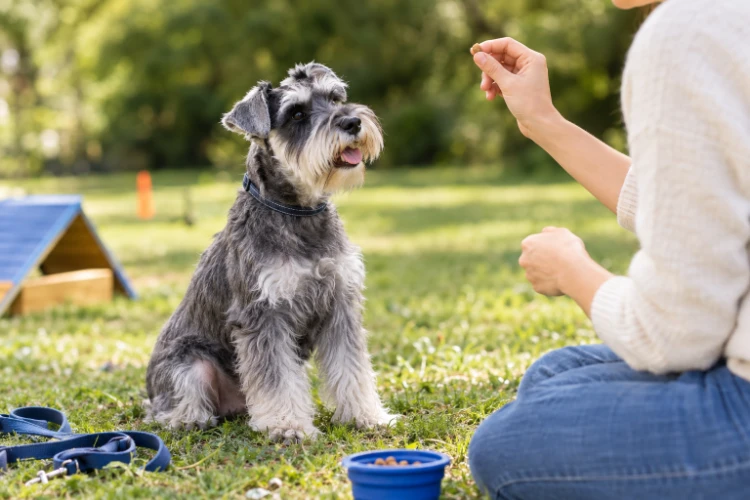
Training a Schnauzer can be both fun and frustrating. One moment, our dog follows every command. The next, they look at us like we have lost the plot. That clever, confident personality makes training rewarding, but it also keeps us on our toes.
At SchnauzerBest, we believe good training should feel practical and positive. Our goal is not to create a perfect robot dog. We want a happy companion that understands our rules and enjoys learning. This guide explains a simple training plan, useful milestones, and mistakes worth avoiding.
Understanding the Schnauzer Mindset
Schnauzers have a long history as working dogs. Their ancestors helped with farm work, guarding, and pest control. That history still influences their behavior today. They often notice movement quickly and enjoy having a job to do.
A Miniature Schnauzer may look small, but its energy levels can surprise new owners. This breed needs both physical activity and mental challenges. Without enough stimulation, some dogs may invent their own entertainment. Unfortunately, that entertainment can involve barking, digging, or stealing socks.
Why Training Needs Mental Stimulation
Training gives a dog something useful to think about. Simple commands can become small daily mental challenges. Puzzle toys can also help prevent boredom when we cannot provide constant attention.
We should combine exercise and mental stimulation whenever possible. A short training session after a walk often works well. The dog has already used some energy and can focus more easily.
Training Around Natural Instincts
A Schnauzer may naturally watch sounds, people, animals, and movement. We should not punish these instincts. Instead, we can teach our dogs when to react and when to relax.
This approach works for all three Schnauzer sizes. However, training needs can differ because their energy and strength vary. Standard Schnauzer training tips and giant Schnauzer training tips may require longer sessions or stronger handling skills.
A Step-by-Step Training Plan
Good training does not need complicated equipment. We can start with a quiet room, small treats, and a clear reward system. Keep each session short, especially with a young schnauzer puppy.
Consistency matters more than marathon sessions. Five to ten minutes of focused work can achieve plenty. Repeat the same lesson several times during the day.
Step 1: Build Attention and Trust
Start by teaching your dog to look at you when you say their name. Use a happy voice and reward eye contact immediately. Repeat this exercise in different rooms as your dog improves.
Next, reward calm behavior around you. This helps your dog understand that relaxing can also earn rewards. It creates a strong foundation for future obedience training.
Step 2: Teach Basic Commands
Begin with simple commands such as:
- Sit
- Stay
- Come
- Down
- Leave it
- Drop it
- Wait
Use positive reinforcement whenever your dog responds correctly. Give a small treat, praise, or access to a favorite toy. Avoid repeating commands endlessly, because your dog may learn to ignore the first request.
Step 3: Add Leash and Recall Training
Leash skills help keep our dogs safe outside. Start indoors or in a quiet yard. Reward your dog whenever they walk beside you without pulling.
Recall training deserves extra attention. Call your dog with an upbeat voice, then reward them heavily when they return. Never punish a dog after a successful recall. Otherwise, coming back may start to feel like a bad deal.
Step 4: Practice Around Distractions
Once basic skills become reliable, add distractions slowly. Try training near mild household noise first. Later, move to a quiet outdoor space.
Increase difficulty one step at a time. If your dog suddenly ignores everything, the environment may be too difficult. Move back to an easier setting and try again.
Puppy Training Milestones
Young dogs develop skills at different speeds. Therefore, we should treat milestones as helpful targets rather than strict deadlines. A healthy schnauzer puppy may progress quickly in one area and slowly in another.
8–12 Weeks: Start With Basics
At this age, focus on name recognition, toilet routines, handling, and gentle social experiences. Short lessons work best. We can also introduce sit, come, and simple leash work.
This stage builds confidence. It also teaches the puppy that learning can be enjoyable.
3–6 Months: Build Better Habits
Now we can increase obedience work and introduce more distractions. Recall, loose-leash walking, and impulse control become increasingly important.
This period can also bring some cheeky behavior. Our puppy may suddenly “forget” commands they previously knew. Stay calm and consistent. Puppies often test boundaries while they learn.
6–12 Months: Strengthen Reliability
Adolescence can create another training challenge. A young dog may become more independent and easily distracted. Continue practicing old commands while adding new ones.
Keep rewarding good behavior. Gradually reduce food rewards when appropriate, but continue using praise and other rewards. Training should remain part of everyday life.
Common Training Mistakes to Avoid
Even experienced Schnauzer owners can make training mistakes. The biggest problem usually involves inconsistency. Dogs learn from patterns, so changing rules every day creates confusion.
Mistake 1: Training Too Long
Long sessions can become boring. They may also reduce your dog’s interest in future lessons. Short sessions usually produce better focus.
Mistake 2: Using Harsh Corrections
Fear rarely creates reliable good behavior. Harsh methods can damage trust and increase stress. Positive reinforcement gives dogs a clear reason to repeat the behavior we want.
Mistake 3: Ignoring Exercise Needs
A bored Schnauzer may become noisy, restless, or destructive. Daily exercise helps reduce excess energy. Still, exercise alone cannot replace training or mental stimulation.
Mistake 4: Expecting Instant Results
Training takes time. Some behaviors may improve within days, while others need weeks or months. We should celebrate small wins instead of expecting perfection.
Health and Training Considerations
Training should always match our dog’s health and physical ability. Some Schnauzers can develop inherited conditions that affect daily activities. For example, progressive retinal atrophy can gradually affect vision.
Vision changes may require us to adjust training methods. Use clear verbal cues and keep familiar areas safe. If your dog suddenly struggles with commands, movement, or navigation, speak with a veterinarian.
We should also consider grooming and handling. The Schnauzer’s double coat needs regular care, and dogs should learn to accept brushing, ear checks, nail care, and gentle handling. Ear cropping also appears in discussions about the breed, but owners should make informed choices based on welfare and local rules.
How to Keep Training Fun
Training should not feel like school detention for our dogs. Mix obedience exercises with games, walks, sniffing, and puzzle toys. This keeps lessons interesting and helps prevent boredom.
Try these simple ideas:
- Hide treats for your dog to find.
- Practice commands during normal walks.
- Ask for a sit before meals.
- Reward calm behavior at the door.
- Use puzzle toys during quiet periods.
- Practice recall in safe areas.
- Teach one new trick each week.
These small habits add up. They also turn training into part of family life rather than another chore on our schedule.
Final Thoughts for Schnauzer Owners
The best training plan combines patience, structure, exercise, and rewards. Our dogs do not need endless drills. They need clear expectations and regular opportunities to succeed.
The same basic approach can support miniature schnauzer puppy training tips, standard Schnauzer training tips, and giant Schnauzer training tips. We simply adjust the difficulty, exercise, and handling to suit the individual dog.
A well-trained Schnauzer can become a wonderful family companion. With steady practice, we can build good behavior without losing the funny, curious personality that makes this breed special. After all, life with a Schnauzer should include a little training—and plenty of personality.