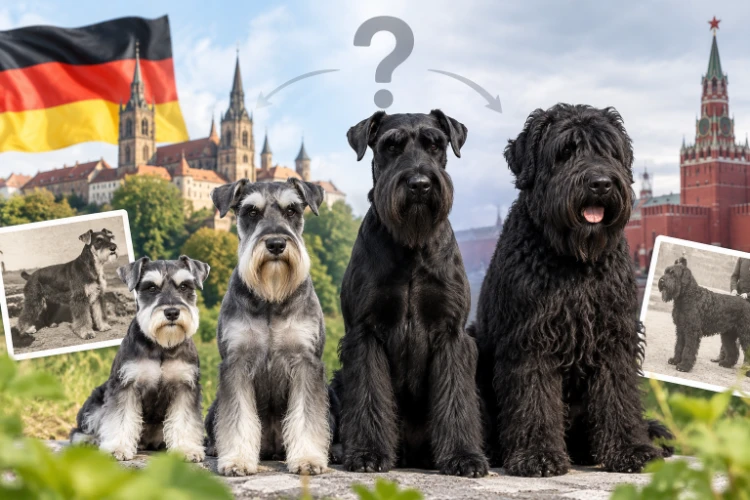
If you search for Russian Schnauzer, you may expect to find a separate Russian dog breed. The answer is more interesting than that. “Russian Schnauzer” does not describe one official Schnauzer breed recognized by major kennel organizations. Instead, the search term can point to older Giant Schnauzer terminology or the Black Russian Terrier.
That confusion makes sense when we look at history. The Giant Schnauzer has strong German roots, while Soviet breeders later used it to create the Black Russian Terrier. So, the two names share a real historical connection. They just describe different dogs.
What Does “Russian Schnauzer” Mean?
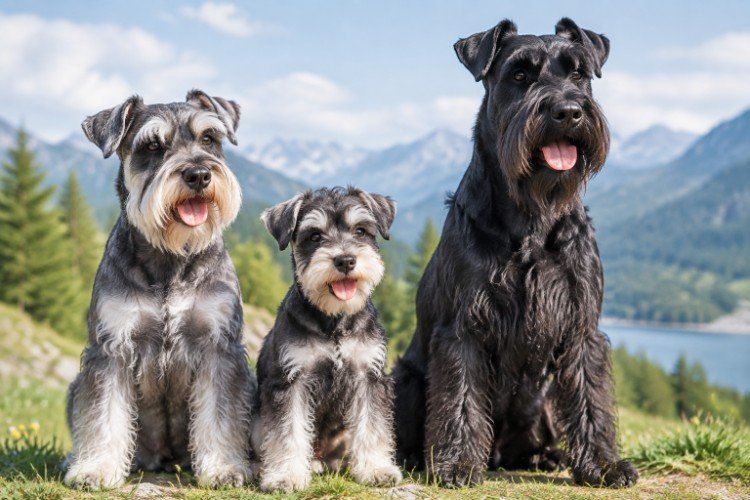
The phrase Russian Schnauzer works more like a search label than a formal breed name. Some historical sources used “Russen Schnauzer” when discussing large Schnauzer-type dogs connected with Munich and Russian-descended communities. Modern breed organizations, however, recognize three Schnauzer breeds: the Miniature, Standard, and Giant.
A Search Term, Not a Standard Breed
When we see this phrase online, we should avoid treating it as an official breed. The breed standard lists specific breeds and traits, and “Russian Schnauzer” does not appear as a fourth Schnauzer breed.
The confusion becomes stronger because several large, bearded dogs share similar features. Their coats, facial hair, and working instincts can look surprisingly alike. A quick image search can therefore send us down a very furry rabbit hole.
The Historical “Russen Schnauzer”
Historical research adds another layer. An American Kennel Club Gazette article notes that some Munich Schnauzers were called Russen Schnauzer between about 1890 and 1920. The term related to Russian tribal descent among some people in the region.
This old usage differs from the modern idea of a Russian dog breed. It also explains why some searches connect the phrase directly with Giant Schnauzer history. In other words, the wording has historical roots, but it does not establish a separate breed.
German Schnauzer Origins and Early History
To understand the term, we need to return to Germany. The modern Schnauzer family developed from working dogs in southern Germany. These dogs helped farmers guard property, control pests, and perform other daily jobs.
The Standard Schnauzer Came First
The Standard Schnauzer represents the original size within the modern Schnauzer family. Its history reaches back many centuries, with strong evidence connecting the breed to German farm dogs.
During the 19th century, breeders worked more carefully to define the type. By 1884, Germany had established an early written standard for Schnauzers and related Pinscher dogs. The breed later became known simply as the Schnauzer.
These dogs were true working dogs, not decorative lawn ornaments. They guarded farms, hunted vermin, and traveled with owners to markets. That practical background still shapes their alert and confident personality today.
From One Type to Three Schnauzer Breeds
The three recognized Schnauzer breeds developed for different purposes and sizes. The Miniature became smaller and more useful around homes and barns. The Giant became larger and better suited to cattle driving and guarding.
The Giant Schnauzer developed in southern Germany during the 19th century. Its ancestry likely included the Standard Schnauzer and several large working breeds. Historical sources also connect it with the Bouvier des Flandres and black Great Dane.
So, the Giant was never simply a Standard Schnauzer that kept eating. Breeders selected dogs for size, strength, endurance, and working ability.
How the Giant Schnauzer Connects to Russia
The Russian connection becomes much clearer during the 20th century. The Giant Schnauzer had already developed a reputation as a strong guard and working dog. That made its traits useful to breeders creating a new Soviet working breed.
From Germany to the Soviet Union
After World War II, Soviet military breeders wanted a powerful dog for demanding conditions. They needed intelligence, strength, trainability, and a coat that could handle harsh weather.
The Red Star military kennel in Moscow led the breeding program. Breeders used several breeds, including the Giant Schnauzer, Rottweiler, Airedale Terrier, and Newfoundland.
This history explains why some people informally connect a Russian dog with Schnauzers. The connection is real, but the name needs correcting.
The Black Russian Terrier
The resulting breed became the Black Russian Terrier. Despite its name, it is not simply a Russian Schnauzer. It is a separate breed created through a complex breeding program.
The Giant Schnauzer provided important traits such as size, intelligence, stamina, and working ability. The Airedale contributed terrier qualities, while the Rottweiler added strength and confidence.
The American Kennel Club recognizes the Black Russian Terrier as a working breed. Its job history includes guarding, military work, and protection.
Russian Schnauzer vs. Black Russian Terrier
This is the most important distinction for anyone researching the phrase.
They Share History, Not Breed Identity
A Giant Schnauzer is a German breed with a long agricultural history. A Black Russian Terrier is a Soviet-created working breed with several ancestral breeds.
They may look related because they actually are related. However, one cannot accurately call every Black Russian Terrier a Russian Schnauzer.
The difference also matters for owners. Their size, grooming needs, temperament, training requirements, and health concerns can vary.
What About Terrier and Schnauzer Genes?
Searches for terrier and schnauzer genes can create another source of confusion. The Black Russian Terrier includes both Schnauzer and terrier ancestry. The Giant Schnauzer itself, however, should not be treated as a simple schnauzer terrier mix.
The Miniature Schnauzer also has historical connections with smaller breeds. Its development involved Standard Schnauzers and other small dogs. Yet today’s Miniature Schnauzer remains a distinct breed with its own standard.
Coat, Colors, Grooming, and Health
Schnauzer terminology becomes even more confusing when coat descriptions enter the picture. People may search for schnauzer hypoallergenic dogs, specific colors, or grooming terms. These details can help identify a breed, but they cannot prove that a dog is a “Russian Schnauzer.”
Coat and the Hypoallergenic Question
Schnauzers have a distinctive wiry outer coat and a soft undercoat. Regular grooming helps maintain that coat and the familiar bearded appearance.
Many people call Schnauzers hypoallergenic because they shed relatively little. However, no dog offers a truly allergy-free experience. Allergens come from skin flakes, saliva, and other sources, not only from loose hair.
Black and Silver, Solid Black, and Other Colors
People searching for black and silver Schnauzers often mean Miniature Schnauzers. The American Kennel Club recognizes black and silver, salt and pepper, and solid black among Miniature Schnauzer colors.
The Standard Schnauzer has different accepted color descriptions. Its AKC standard recognizes salt and pepper and solid black.
Therefore, color can help with identification. Still, it should never replace proper breed records or a reliable breed standard.
Cutting a Schnauzer
Cutting a Schnauzer also requires some care. Grooming methods can change the texture and appearance of the coat. Show grooming may differ from the practical trim used for family pets.
We should also remember that grooming does not change the breed. A carefully trimmed dog may look very different from a traditionally groomed Schnauzer. The beard may disappear, but the genetics certainly do not.
Training, Working Instincts, and Health
The historical purpose of these dogs still influences modern behavior. Schnauzers often remain alert, energetic, and eager to participate. Black Russian Terriers also retain strong protective instincts.
Training Sessions Should Stay Consistent
Short, positive training sessions usually work better than endless drills. Schnauzers are intelligent, but intelligence does not always mean instant cooperation.
We should use clear commands and reward good behavior quickly. Early socialization also helps dogs learn how to handle visitors, animals, and unfamiliar situations.
Health Issues to Watch
Every breed can develop health issues, and responsible owners should understand common risks. The exact risks depend on the individual breed, family history, age, and lifestyle.
Regular veterinary care can help identify problems early. Owners should also maintain healthy weight, exercise routines, dental care, grooming, and parasite prevention.
Why “Russian Schnauzer” Still Appears Online
Search engines often preserve unusual historical terms. Users may also combine words after seeing similar-looking dogs. That creates phrases such as Russian Schnauzer, Russian Terrier, and German Schnauzer.
For researchers, old sources can add another wrinkle. Even Wikipedia the Free Encyclopedia and other general references may use historical or alternate terminology. That does not automatically make every term an accepted modern breed name.
If we use the phrase carefully, it becomes useful rather than misleading. We can explain what the searcher probably means while preserving accurate breed history.
Russian Schnauzer: The Simple Answer
So, what does Russian Schnauzer refer to?
Usually, it points toward one of two historical ideas. First, “Russen Schnauzer” appeared as an older term connected with some Giant Schnauzer-type dogs. Second, modern searches may use it when referring to the Black Russian Terrier because the breed has significant Giant Schnauzer ancestry.
Neither explanation creates a fourth official Schnauzer breed. The recognized Schnauzer family remains the Miniature, Standard, and Giant.
For us, that distinction matters. Breed names carry history, genetics, working roles, and specific standards. A strange search term can open the door to that history, but we should not let the internet turn one dog into three dogs wearing the same beard.
Frequently Asked Questions
Is the Russian Schnauzer a real breed?
No official major kennel standard recognizes a separate breed called the Russian Schnauzer. The phrase usually reflects historical terminology or confusion with the Black Russian Terrier.
Is the Black Russian Terrier related to Schnauzers?
Yes. The Giant Schnauzer played an important role in developing the Black Russian Terrier. However, the two remain separate breeds.
Are Schnauzers German dogs?
Yes. The Miniature, Standard, and Giant Schnauzer all trace their breed development to Germany. Their histories and working roles differ by size.
Are Schnauzers related to terriers?
Some Schnauzer history overlaps with terrier-type working traits. The Miniature Schnauzer also belongs to the AKC Terrier Group. The Black Russian Terrier, however, has a much more complex ancestry.
Are Schnauzers hypoallergenic?
No dog is completely hypoallergenic. Schnauzers shed relatively little, which may make them easier for some allergy-sensitive households. Individual reactions can still vary.
Final Thoughts
The phrase Russian Schnauzer sounds like a breed name, but history tells a more interesting story. It connects old Schnauzer terminology with the later development of a powerful Soviet working dog.
The Giant Schnauzer began in Germany as a practical farm and guard dog. Decades later, Soviet breeders used its abilities while creating the Black Russian Terrier. That unusual journey explains why the two names sometimes appear together.
For Schnauzer owners, this history gives us more than a trivia fact. It reminds us that modern breeds developed through real work, selective breeding, changing societies, and sometimes complicated historical events. And yes, occasionally, one very confusing beard.