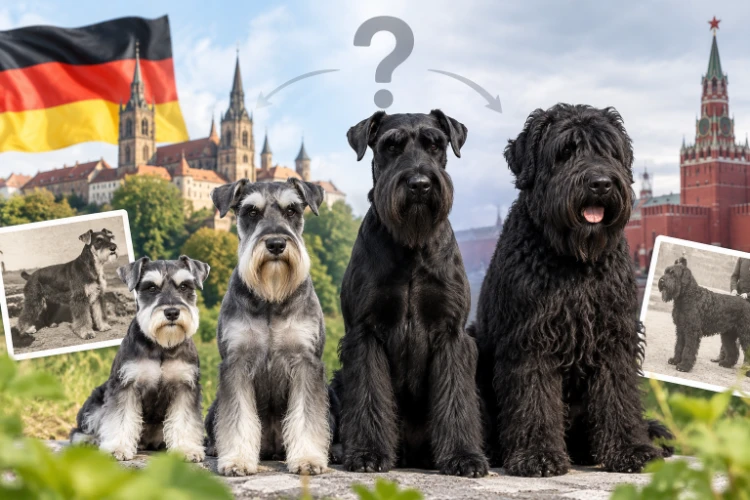
If you have ever watched one chase a rat, guard the yard, or bark at a squirrel, you may wonder: Is a Schnauzer a Terrier? The answer is more complicated than a simple yes or no.
The breed looks and behaves like a terrier in many ways. It is alert, bold, energetic, and willing to chase small pests. However, its historical roots come from Germany, not the traditional British Terrier family.
That difference makes this breed especially interesting. Under the beard and eyebrows lies a versatile working dog with a long farm history.
Is a Schnauzer a Terrier?
The short answer
Historically, this breed is not a traditional British Terrier. The FCI places the Standard variety in the Pinscher and Schnauzer type, within Group 2. The organization lists Germany as its country of origin.
The American Kennel Club creates an interesting twist. It places the Miniature variety in the Terrier Group. The Standard and Giant varieties belong to the Working Group.
So, classification depends partly on the registry. That does not mean the Miniature suddenly gained British ancestors. In fact, the AKC specifically notes its German origin and lack of British ancestry.
Why does it look like a terrier?
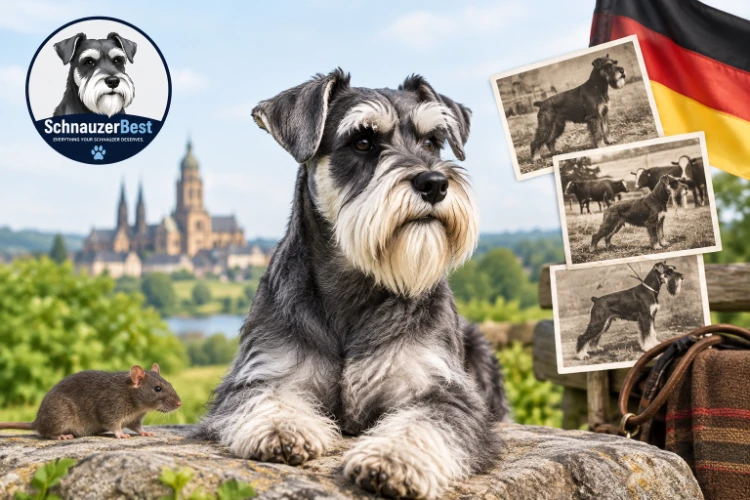
The answer starts with its original work. Early German farm dogs needed courage, speed, alertness, and strong prey drive. They controlled rodents and protected farms while also helping with livestock.
Those jobs closely resemble traditional Terrier work. Both groups often needed to confront pests without hesitation. That shared purpose can produce remarkably similar behavior.
This explains why people sometimes search for terrier and schnauzer genes. Similar traits do not automatically prove direct Terrier ancestry. Instead, different breeds can develop similar abilities because they faced similar working problems.
German Origins and Early Development
The German working-dog connection
The Standard variety is the oldest of the three modern breeds. The AKC traces its history back to Germany and describes it as a versatile farm worker. It guarded livestock, hunted vermin, and protected people traveling to market.
Historical records and artwork show similar wire-haired farm dogs centuries ago. By the late 19th century, breeders began developing clearer types. The first written standards for these German dogs appeared during this period.
This history gives us a useful clue. The modern german schnauzer did not begin as a fashionable companion. Farmers valued it because it could handle several jobs at once.
The role of German Pinschers
The story also connects with German Pinschers. Both types developed within the broader German Pinscher and Schnauzer tradition. The FCI still places the two breeds within the same larger group today.
However, we should avoid treating every historical dog as a modern purebred. Early European working populations were much less rigid than today’s registered breeds. Breeders gradually selected consistent size, coat, color, and temperament.
That process eventually produced the recognizable breed standards we know today.
Three Breeds, Three Jobs
The Standard Schnauzer came first
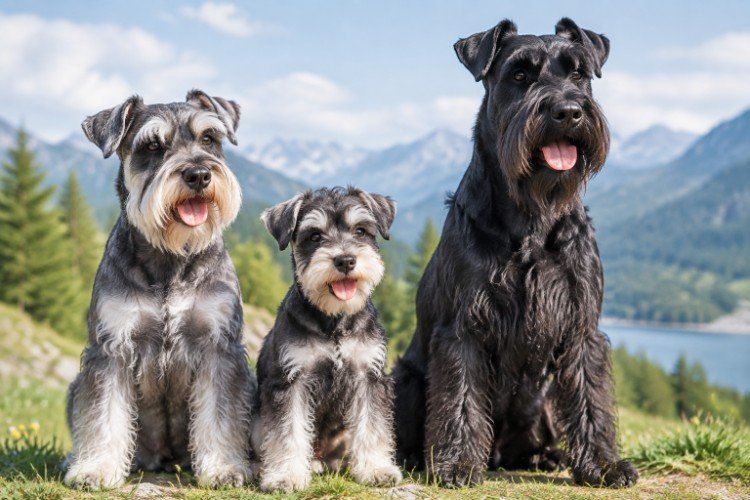
The standard schnauzer represents the original size. Farmers used these medium-sized dogs for several practical tasks. They guarded property, controlled vermin, and helped protect livestock.
Their versatility made them valuable farm dogs. A farmer did not need three different dogs when one reliable worker could perform several jobs.
Their coat also served a practical purpose. The harsh outer layer offered protection, while the soft undercoat provided additional insulation. Those wiry coats became one of the breed’s most recognizable features.
Mini Schnauzers became smaller ratters
Farmers later developed mini Schnauzers for smaller spaces and pest-control work. The AKC reports that breeders used smaller Standard dogs along with other small breeds during this development.
The result was a compact, active dog with strong hunting instincts. These dogs could work around barns, homes, and other areas where larger animals were less practical.
The American Kennel Club recognized the Miniature breed in 1926. It remains the only one of the three placed in the AKC Terrier Group.
The Giant took on heavier work
The giant schnauzer developed for larger jobs. Historical accounts connect the breed with cattle driving and guarding in Bavaria. Later, these dogs worked around butcher shops, stockyards, and breweries.
Their size and protective nature made them useful as guard dogs. They also entered police work in Germany during the early 20th century.
The Giant therefore followed a very different path from the small ratting dog. Both share a family history, but their working roles became quite different.
From Farm Dogs to Dog Shows
Breed standards changed everything
During the late 19th century, organized breeding became more important. Kennel clubs and breed organizations helped establish consistent physical traits and temperament expectations.
The first written breed standard appeared in 1884. German organizations later continued to refine the breed’s characteristics.
This period also saw rapid growth in dog shows. Breeders could now compare dogs publicly and select animals that better matched the desired type.
The modern breed standard therefore reflects both history and human selection. It describes more than appearance. It also preserves traits connected with movement, coat, structure, and temperament.
The coat was never just decoration
Today’s beard may look like a gentleman’s accessory, but it had a practical purpose. The thick facial hair helped protect the face during encounters with rodents.
The wiry outer coat offered another layer of protection. That made sense for a dog working around barns, rough ground, and livestock.
Even today, owners spend plenty of time cutting a schnauzer and maintaining its coat. The grooming may look glamorous, but the original coat evolved for work.
What Happened During the World Wars?
A breed shaped by difficult times
The two world wars affected many European breeds. Breeding programs faced shortages, disruption, and changing priorities.
The Standard type also served during World War I. The AKC notes that German forces used these dogs as guard dogs, while the Red Cross used them as dispatch carriers.
The Giant later became associated with police and security work. Its intelligence and protective instincts made it useful beyond traditional farm work.
These roles show how adaptable the breed could be. It was never limited to one job.
Genetics, Health, and Modern Breed Identity
Similar behavior does not prove shared ancestry
Genetics can help researchers understand relationships between dog breeds. However, behavior alone cannot tell us that two breeds share recent ancestry.
A terrier-like personality can develop through selection for similar tasks. Farmers wanted dogs that were brave, alert, persistent, and quick around pests. Those traits appeared in several unrelated breeds of dog.
This is why we should treat claims about direct “terrier and schnauzer genes” carefully. Historical breeding records and modern genetic studies provide different kinds of evidence.
Health still matters
Breed history also matters when we discuss modern health. Selective breeding can preserve desirable traits, but it can also concentrate certain inherited risks.
Different varieties have different health screening recommendations. The AKC recommends testing for conditions involving hips, eyes, thyroid function, and specific inherited disorders depending on the variety.
That does not mean every individual dog will develop these health issues. Good breeding, veterinary care, nutrition, exercise, and regular screening can all support better long-term health.
Life expectancy also varies by size and individual health. Owners should focus on healthy daily habits rather than chasing one fixed number.
What About “Russian Schnauzer” and Hypoallergenic Claims?
A confusing historical name
You may encounter the term Russian Schnauzer in older material. This name can refer to historical descriptions rather than a separate modern breed.
Older dog literature often used different names for working types. Those labels do not always match the breed names recognized by modern kennel organizations.
This is another reason historical sources need careful reading. A name in an old document does not automatically represent a separate breed today.
Is the breed hypoallergenic?
Many people also search for schnauzer hypoallergenic information. The wire coat sheds relatively little, which makes these dogs appealing to some allergy-sensitive families.
However, no dog is completely allergy-free. Allergic reactions can involve proteins from dander, saliva, and other substances.
Regular grooming can reduce loose hair and debris. It cannot remove every potential allergen, so individual reactions still matter.
So, Is a Schnauzer a Terrier?
The best answer depends on how we define “Terrier.” Historically, these dogs developed from German working stock rather than the traditional British Terrier family.
The Miniature variety is the unusual case. The AKC places it in the Terrier Group, even though its origins remain German.
The Standard and Giant varieties tell a different story. Their histories focus strongly on farming, livestock, guarding, cattle driving, and other working roles.
So why does the breed feel so terrier-like? The answer is simple: similar jobs can create similar dogs.
Our bearded friend may not have started life as a classic Terrier. Yet it chased vermin, guarded farms, protected families, and worked with impressive determination.
And honestly, that may explain the personality better than a label ever could.